NODfactory products are made by fused filament fabrication (FDM/FFF) 3D printing.
Visible layer lines and small surface marks are normal. This guide explains what we
treat as a manufacturing defect — a fault that affects how the part
looks, fits, or works — under our
returns & refunds policy.
If you are unsure, contact us with your order reference and clear photos before
returning anything.
Layer shifting
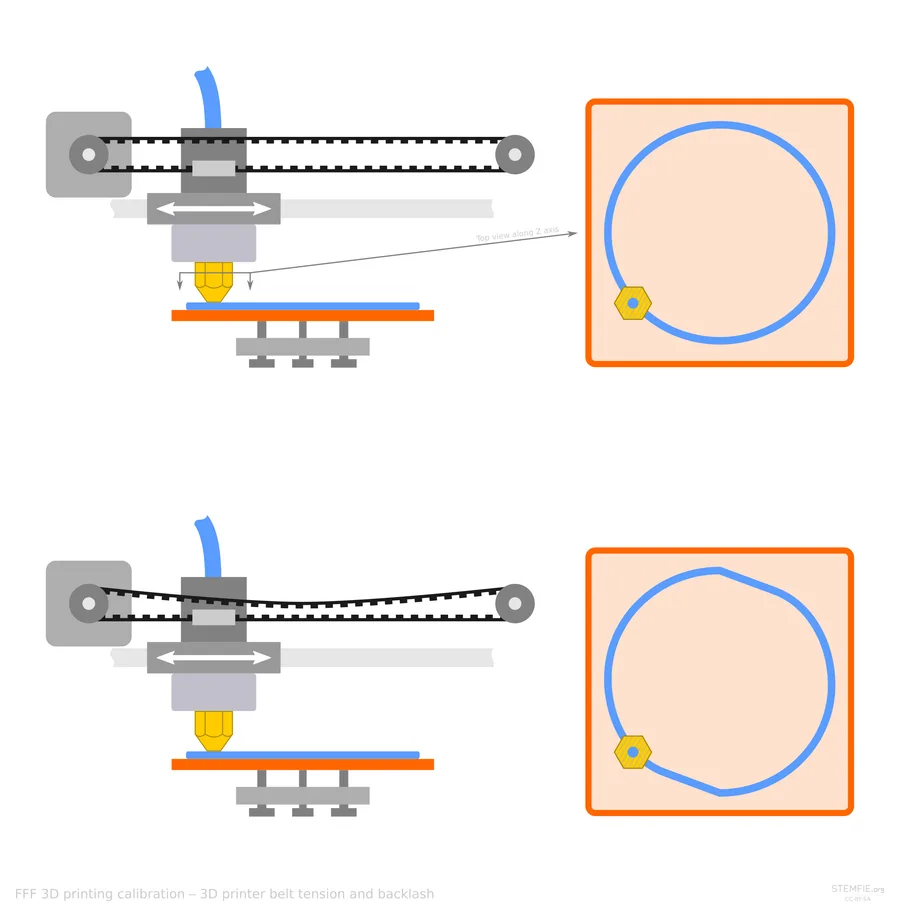
Illustration: misaligned layers from mechanical positioning errors.
Layers are visibly offset sideways, creating a stepped or “staircase” profile. The
print may look skewed or as if one section slid relative to the rest.
Usually qualifies as a defect when:
The shift is clearly visible and changes the shape, fit, or function of the part.
Features no longer line up (holes, slots, lids, moving parts, or mating surfaces).
Usually not a defect: very slight surface texture from normal layer stacking.
Poor layer bonding / delamination
Example of visible print-quality faults on finished parts.
Layers separate, crack, or peel apart — either during printing or soon after you receive
the item. You may see gaps between layers, shells that flex apart, or sections that feel
weak and crumbly.
Usually qualifies as a defect when:
Layers split open under light hand pressure in a way a sound print would not.
A structural part cannot bear normal handling or assembly because layers did not fuse.
Large voids or missing walls appear inside or outside the part.
Usually not a defect: fine layer lines on the surface without separation.
Severe stringing, oozing, or “hairy” filament
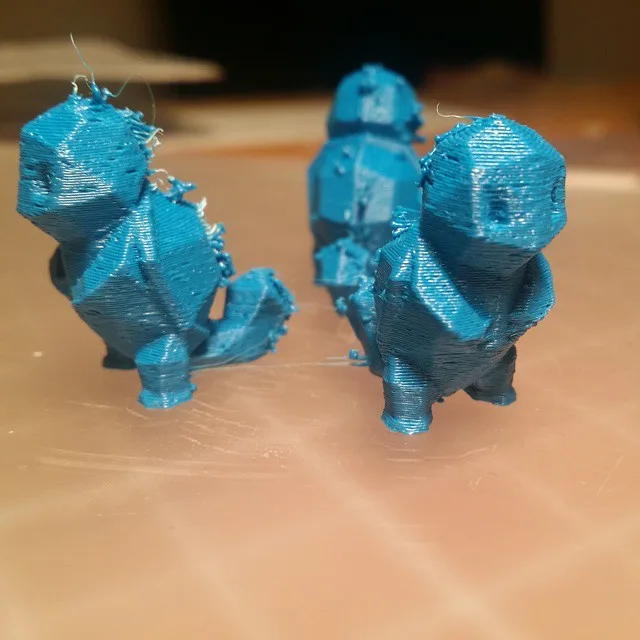
Example of fine plastic wisps between printed surfaces.
Thin strands or blobs of plastic between areas of the model, around holes, or across
open spaces — sometimes called stringing, oozing, or “spider webs.”
Usually qualifies as a defect when:
Strings are dense, large, or block holes, threads, clips, or moving parts.
Cleaning would risk breaking functional features or the part still looks unacceptable.
Usually not a defect: a few tiny wisps you can remove in seconds without damage.
Under-extrusion, gaps, and incomplete walls
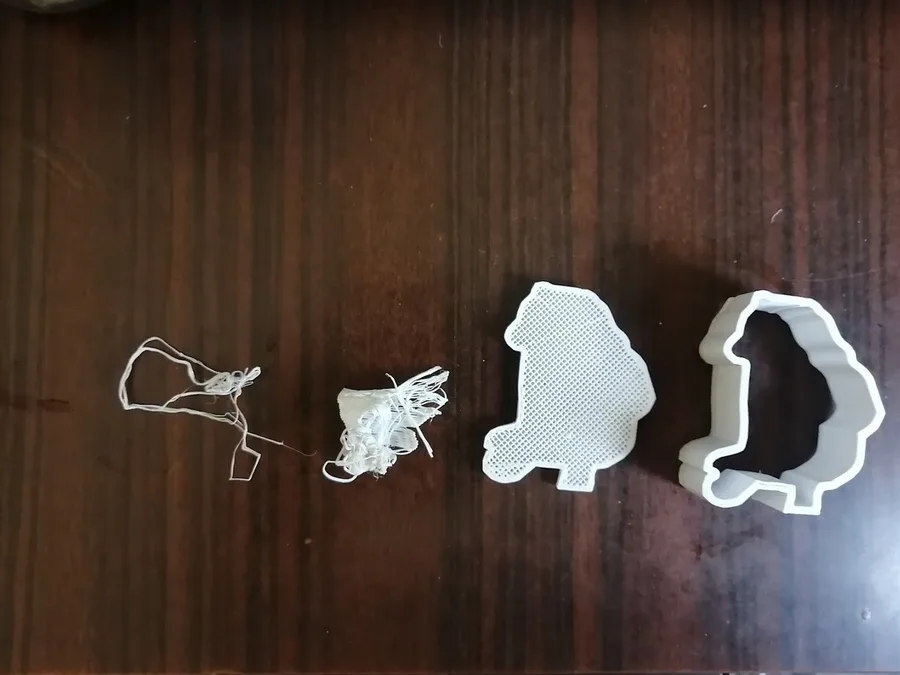
Examples of failed or incomplete prints.
The printer did not deposit enough material. You may see holes in walls, sparse infill
showing through, very thin sections, or parts that feel hollow where they should be solid.
Usually qualifies as a defect when:
Gaps or missing material affect strength, appearance, or usability.
A section of the model is clearly missing or did not finish printing.
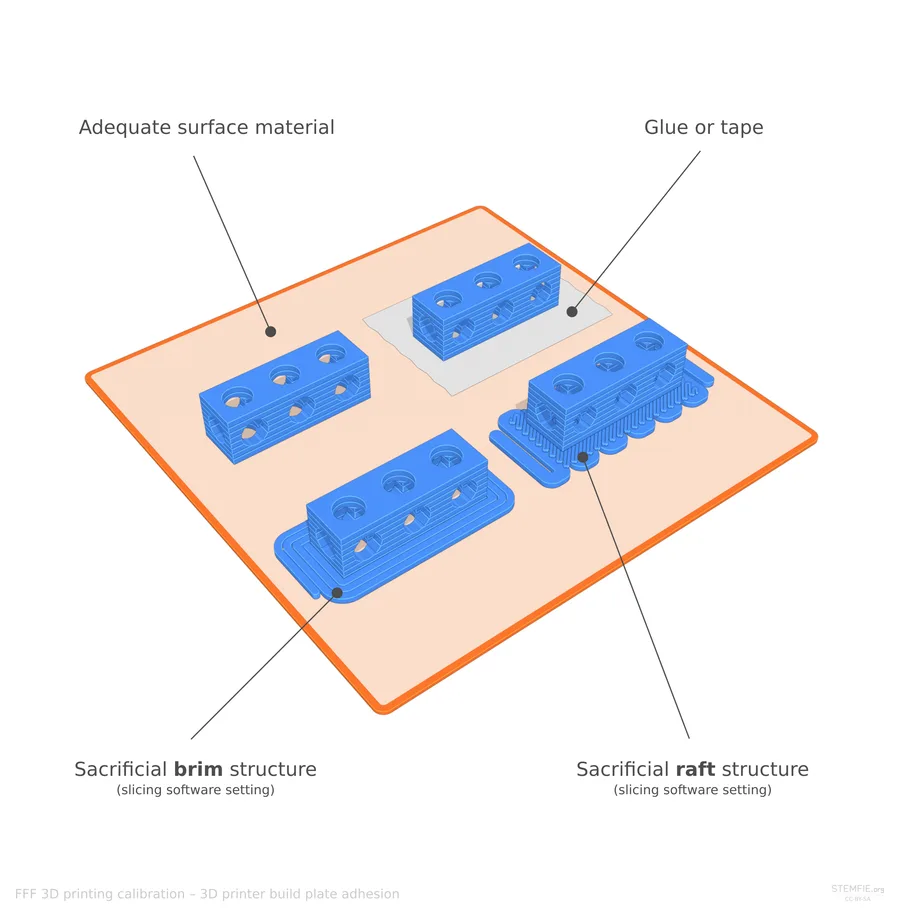
Major warping or corner lift
Illustration: how poor adhesion and warping distort a print.
Corners or edges curl upward, the base is no longer flat, or the part twisted during
printing so it will not sit, align, or assemble correctly.
Usually qualifies as a defect when:
The part rocks on a flat surface or cannot be assembled because of distortion.
Critical dimensions are out of tolerance because of lift or twist.
Usually not a defect: minimal edge rounding typical of FDM without functional impact.
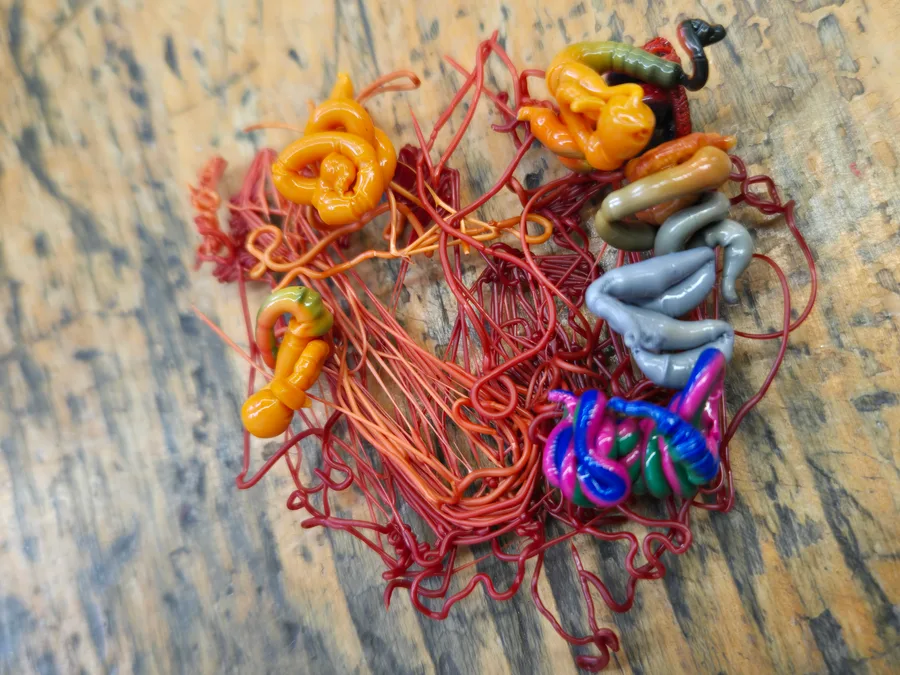
Collapsed print, spaghetti, or severe structural failure
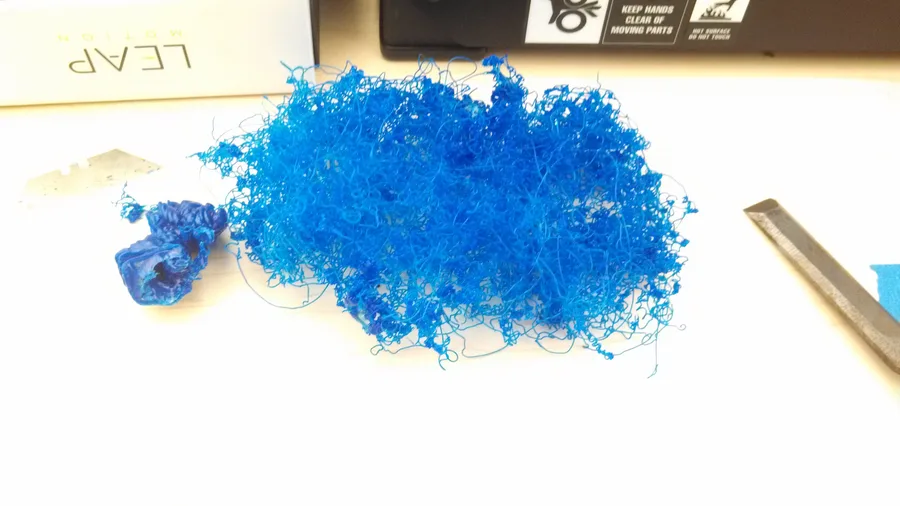
Example of a print that failed mid-way and produced loose filament.
A section collapsed, detached, or was knocked loose during printing, leaving tangled
filament, missing geometry, or a part that is obviously incomplete. We would not normally
ship a part in this state — if something similar arrives damaged in transit, contact us
with photos.
Usually qualifies as a defect when:
Large areas are missing, crushed, or replaced by loose plastic.
The item cannot be used for its intended purpose without reprinting.
Cracks and splits after printing
Cracks that appear after the part has cooled — often on tall prints, sharp corners, or
material prone to shrinkage — especially if they grow with normal handling.
Usually qualifies as a defect when:
A crack goes through a load-bearing area or is likely to spread with normal use.
The part arrived cracked without shipping damage.
What we usually do not classify as defective
Visible layer lines typical of FDM printing.
Small support marks or faint blemishes removed during normal cleanup.
Slight colour or finish variation between batches of filament.
Design features you chose (orientation, layer height, material) that inherently show texture.
Damage caused after delivery through misuse, modification, or improper storage.
What to send us
Email via the contact page with your order reference and:
Photos in good light (overall view + close-ups of the fault).
A short note describing how it differs from what you ordered.
Which section of this guide best matches the issue, if you can.
This creates a custom print request for the verified product and opens its chat. It is not a purchase; our team will review the details and discuss a quote with you.